

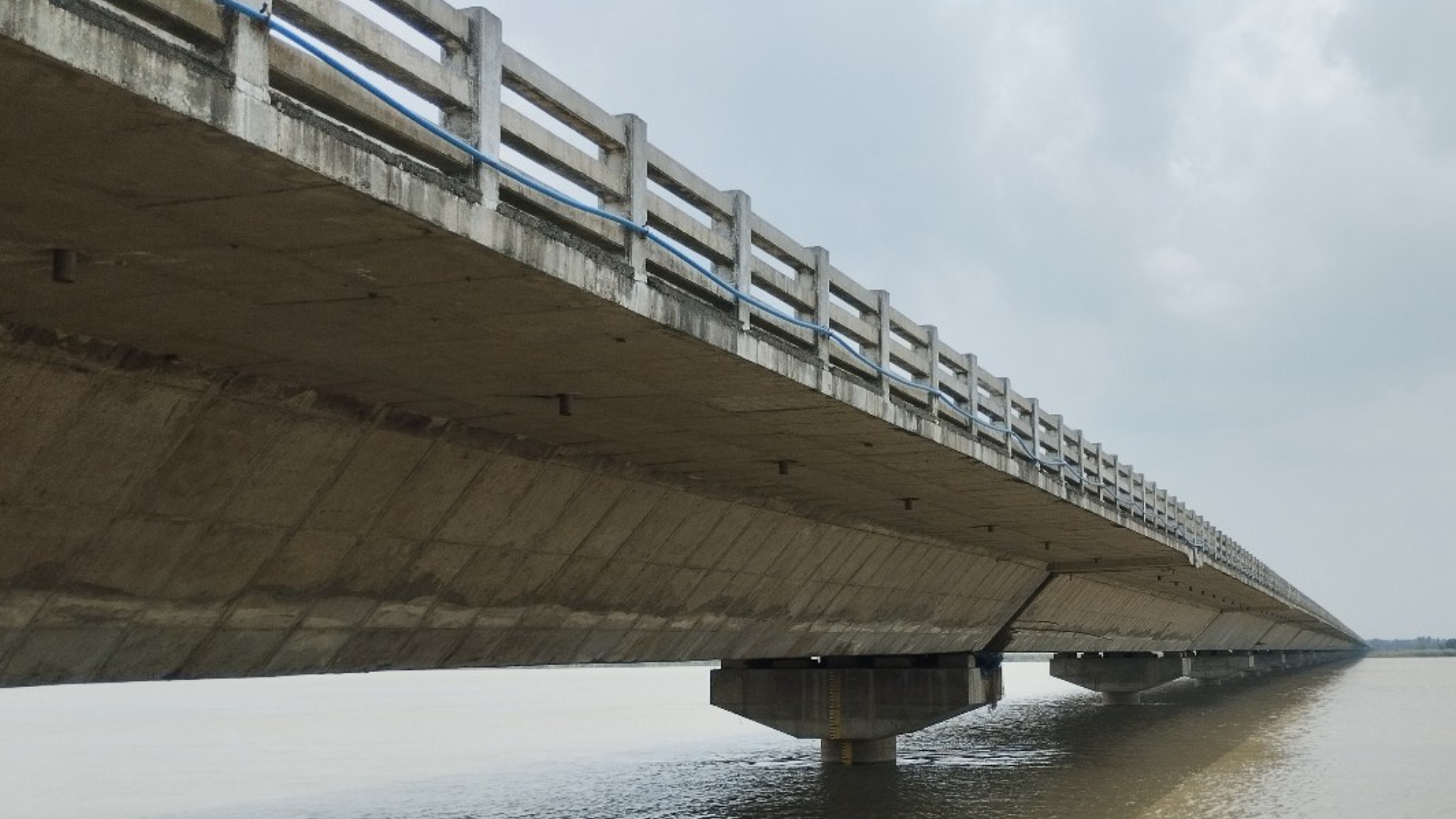
Bihar Rajya Pul Nirman Nigam Limited (BRPNNL) is the state public-sector undertaking established in 1975 with the mandate to construct and maintain bridges and roads across Bihar. BRPNNL engaged BuildAid for a large-scale structural audit programme covering 85 bridges spread across the state – one of the most extensive bridge-audit assignments in recent state history.
Auditing 85 bridges as a single programme presents both logistical and technical challenges. Bridges varied in age, span configuration, materials (RCC, PSC, steel-composite), traffic exposure and environmental setting – from flood-prone river crossings in north Bihar to high-traffic ROBs near urban centres. Each bridge required individual diagnosis, while the programme as a whole demanded standardised methodology, consistent reporting and a uniform decision framework so that BRPNNL could prioritise interventions across the portfolio.
BuildAid mobilised parallel field teams equipped with NDT instrumentation – UPV, Rebound Hammer, cover-meter, half-cell potential, carbonation depth, chloride profiling, and core extraction. Each bridge was assessed for deck, girder, bearing, pier, abutment and approach condition. Where required, load-rating analysis was carried out in STAAD.Pro / SAP-2000 to compare current carrying capacity against IRC live-load standards. Findings were captured in a standardised dashboard so BRPNNL could compare bridges side-by-side and prioritise repairs by risk and traffic importance.