

DCW Limited, one of India’s oldest chemical companies established in 1939, operates a fully integrated chemical complex at Sahupuram near Thoothukudi on the Tamil Nadu coast. A 58.27 MW captive cogeneration plant supports the plant’s round-the-clock chemical operations. At the heart of this cogen facility sits the Steam Turbine Generator (STG) building – a heavy industrial structure housing rotating equipment, condensers and auxiliary systems that operate continuously under vibratory and thermal loading.
BuildAid was engaged to carry out a comprehensive structural condition assessment of the STG building to determine its current load-carrying capacity, identify deterioration mechanisms, and recommend appropriate remedial measures so the plant could continue safe and reliable operation.
The STG building presented several challenges typical of a coastal industrial structure of this vintage: high chloride loading from marine aerosols, sustained vibration from rotating turbomachinery, elevated and cyclic temperatures, and significant chemical exposure from adjacent process units. All work had to be carried out without interrupting plant operations – access to elevated machine floors, the condenser pit and turbine pedestal areas had to be coordinated around the operating shift schedule.
BuildAid’s engineers followed the firm’s six-step diagnostic methodology – historical review of the structure and as-built drawings, definition of the testing methodology, in-situ testing, evaluation of test data, recommendation of remedial measures, and a structural health monitoring framework. The historical review covered original design loads, prior maintenance interventions, and the operating history of the STG unit.
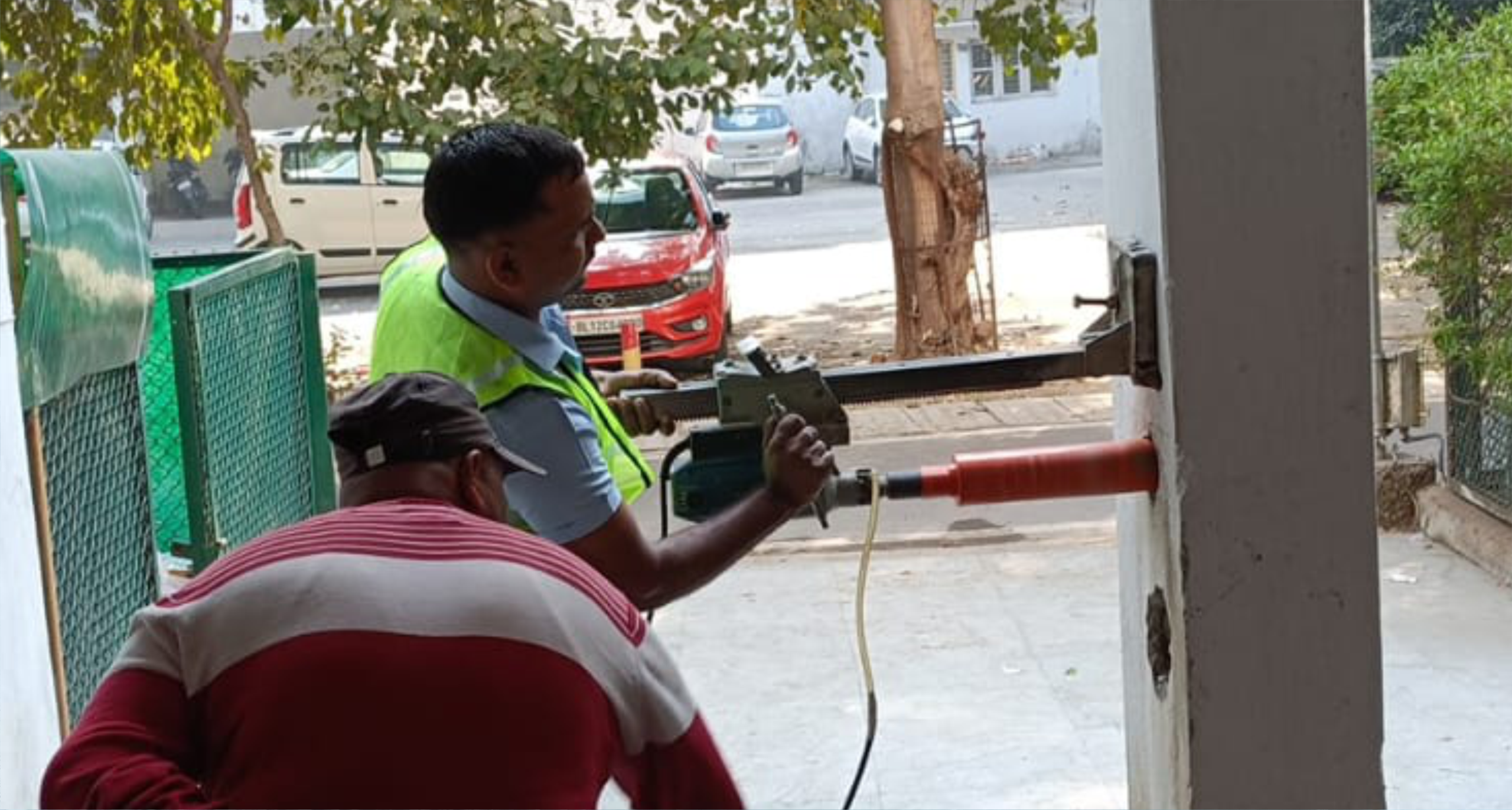
The investigation combined visual mapping of distress, Ultrasonic Pulse Velocity (UPV), Rebound Hammer testing, core extraction and laboratory compressive strength tests, carbonation depth measurement, chloride profiling, half-cell potential mapping and cover-meter scanning. Vibration measurements and a turbine-pedestal modal check were taken to verify dynamic performance. Findings were correlated against the original design intent using STAAD.Pro / ETABS modelling.